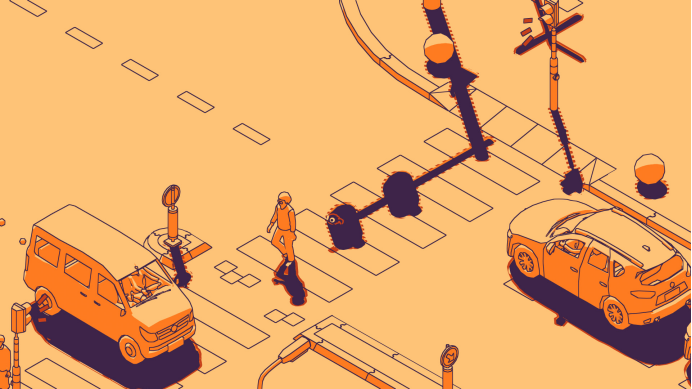


The sound of electric current in the broadcasting tower is the last breath of the world.
Every morning, when I open it, the noise immediately fills the whole tent. It’s not music, it’s not vocals, it’s pure and noisy static electricity. Marta sorted bullets in the corner and looked up at me when she heard the sound. Her eyes were asking: Will anyone speak inside today? I turned up the volume until my ears hurt. I’m waiting. Wait for a living voice that may never appear.
The camp was built in an abandoned gas station. Twelve people. We have a small vegetable garden, and the leaves are always yellow. Water needs to be distilled three times to drink. My desk is a spread-out map of the refueling area, on which the places we have been are circled with a red pen, and the places we can’t go back to are crossed out with a black pen. This is not a strategy. This is the scope of our life that is gradually narrowing.
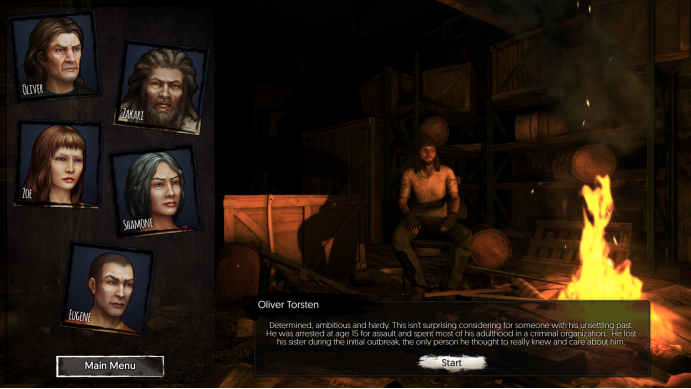
Alex’s leg injury got worse. The drug reserve is zero. I stared at the list for a minute, and then called Lane. He is the fastest runner among us. “Go to the old clinic in the north of the city,” I said, drawing a line on the map with my finger. “Last time we left a box of things under the pharmacy counter.” Rain nodded and began to check his backpack. He didn’t ask why he went, nor did he ask what to do if he couldn’t come back. We are all used to it. When he left, Marta stuffed a compressed cookie into his pocket. A very small piece. That’s half of her lunch.
I switched the perspective and set off with Lane. The world has changed from the icon of the management menu to the broken asphalt underfoot and the ashes floating in the air forever. The third person makes everything look further and more real. Rain’s backpack swayed up and down as he ran, and I could hear his gradually heavier breathing. When I passed the library, something moved from the window on the second floor. I asked him to squat down and hold his breath. The shadow moved away. It may or may not be the wind. Let’s keep going.
It’s darker inside the clinic than outside. The aperture of the flashlight swept over the overturned wheelchair, the scattered medical records, and a doctor leaning against the wall who had already become a skeleton. Silence is thick. I found the box of supplies in the pharmacy, and there was thick dust on it. Just as Lane reached out to take it, there was a sound of hitting the back door — not knocking on the door, but something hitting the door. One time, two times. The dust on the door frame fell.
Rain grabbed the box and we started to run. The road that comes in is a dead end. I guided him through the waiting area and kicked open a side window. When he turned it out, the box got stuck. At that moment, I heard the door behind me being knocked open. I didn’t look back and followed him into the backyard. We climbed over the rusty fence and ran two streets away before we dared to stop and take a breath. Rain’s arm was scratched by rust. It was not deep, but it needed to be disinfected. The antibiotics in the box are enough for two weeks. It’s worth it.
But the camp didn’t cheer. Alex took the medicine and the fever subsided. Rain’s wound needs to be observed. Marta took out another cookie from her quota and handed it to him when it softened. At night, I sat in front of the radio tower and turned on the switch again. Electrostatic sound.
Then, miraculously, a voice pierced the noise. “This is... a safe haven... Is there anyone? That’s it.” The voice was intermittent, mixed with coughing. I grabbed the microphone and tightened my fingers. Marta put down the rag in her hand, and everyone looked over. “Got it, ‘safe haven’. This is the ‘gas station’. What do you need? That’s it.” There was silence for a long time. It’s been so long that I thought the signal was cut off.
Then the voice said, “The child... has a fever. Do you have penicillin? We can exchange... We also have... some canned food.” I looked at our list of supplies. Penicillin, we have it, but not much. It’s just enough for us to use for two weeks. Canned food, we are also short. Alex needs nutrition. I looked into the tent. Rain’s arm, Marta’s expectant eyes, and Alex’s weak sleeping face. The static sound hissed in the background, like the last patience in the world. I pressed the call button. “Tell us where you are,” I said. “We’ll send someone to talk about it.”
This decision was made not because of the strategy, not because the game told me that it was a “diplomatic option”. Because after a long silence, when you hear another living person say “the child has a fever” in a trembling voice, you can’t just turn off the radio and turn around to calculate how many days your penicillin can last.
The Withering is not about the end of the world. It is about the end of the world, how do you learn to become a person again day by day, hour by hour. Learn to make room for a little irrational kindness in the gap of accurately calculating the probability of survival. Learn to manage the hunger, pain and fear of twelve people, and manage your own heart that is about to forget how to beat.
And the static sound of the radio tower is your own heartbeat. As long as it is still ringing, it proves that you are still listening. It proves that you are still waiting.